
Both methods remove the air from a pack and seal the food in barrier film. Both can give fresh meat, cheese and ready meals weeks of shelf life. Yet they suit very different businesses, and picking the wrong one can mean paying for a machine you don’t need or running a line that can’t keep up with orders.
This guide compares the two main forms of vacuum seal packaging, thermoforming and vacuum pouches, so you can decide which fits your product, your volume and your budget.
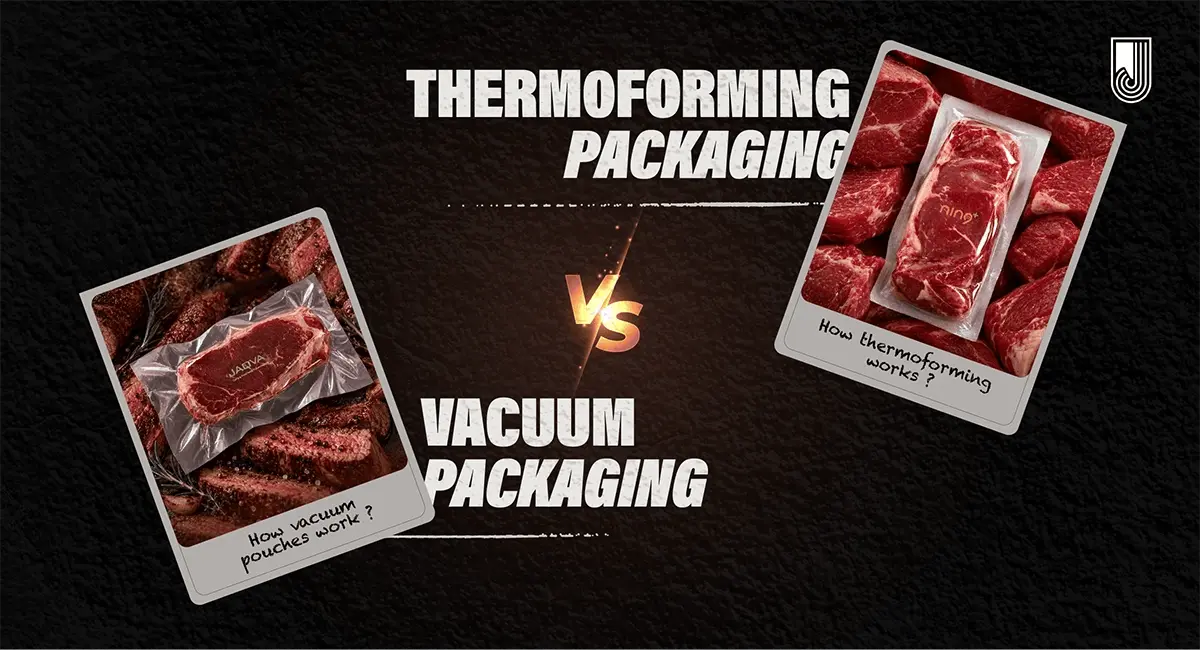
How vacuum pouches work
A vacuum pouch is a pre-made bag. An operator places the product inside, puts the open end across the sealing bar of a chamber machine (or feeds it into a belt machine), and the machine pulls out the air and heat-seals the bag shut.
Pouches come in almost any size, can be plain or printed, and can be made from standard or high barrier film. For products that shrink tightly around the contents, barrier shrink bags work the same way but pass through hot water after sealing.
How thermoforming works
A thermoforming machine runs two films from rolls. The bottom web is heated and pulled into moulds to form pockets. The product is loaded into the pockets, a top web (the lid) is laid over them, the air is removed and the two webs are sealed together. The machine then cuts the strip into individual packs.
Everything happens in one continuous line, and the pack shape is fixed by the mould. This is the format you see on most supermarket sausages, sliced cheese, cooked meats and portion-packed fish.
Side-by-side comparison
Volume and speed. Thermoforming is built for long runs of the same pack. Once the line is running it produces packs continuously with little handling. Pouches rely more on manual loading, so output depends on how many people and machines you have.
Labour. Thermoforming lines need operators, but far fewer per pack. Pouch lines need hands for loading, placing and unloading, which becomes the main cost as volume grows.
Equipment cost. A chamber vacuum machine costs a fraction of a thermoformer. For a new product, a small plant or a business still testing demand, pouches let you start packing without a large capital outlay.
Flexibility. Pouches win here. Changing pack size means ordering a different bag. On a thermoformer, a new pack size often means a new mould set and a changeover.
Product shape. Thermoforming suits uniform products: sliced cheese, sausages, portion cuts, cooked items. Pouches handle irregular shapes and varying sizes, such as whole muscle cuts, large cheese blocks and fish fillets of different weights.
Presentation. Thermoformed packs stack neatly, look consistent on the shelf, and take a printed top web with the brand, a window and easy peel opening. Pouches can be printed too and look excellent when clear, but individual packs vary more.
Film use and waste. Thermoforming trims a skeleton of film from around each row of packs, so some material is always lost. Pouches have little trim waste, but the bags cost more per unit to make than roll stock.
Which one suits your product?
Thermoformed food packaging usually makes sense when:
- you pack the same product in the same pack size, day after day
- volumes are high enough that labour per pack matters
- consistent shelf presentation and printed branding are important
- you want easy peel or reclosable packs
Vacuum pouches usually make sense when:
- product sizes and weights vary
- you run many SKUs in short batches
- volumes are still growing, or you are launching a new line
- you sell to foodservice, wholesalers or export customers who care more about protection than shelf display
Many processors use both: pouches for bulk, foodservice and irregular cuts, and a thermoforming line for their retail best-sellers.
Choosing the film
Whichever route you take, the film decides how long the food lasts. For vacuum food packaging of fresh meat and cheese, a high oxygen barrier (usually EVOH with nylon) is standard. Thermoforming film also has to stretch evenly into the mould without thinning too much at the corners, so the forming web is thicker and more elastic than the top web. For pouches, puncture resistance and seal strength matter most, especially with bones or sharp edges.
Our range covers both sides: thermoforming packaging film for forming and lidding webs, clear and printed vacuum pouches, and barrier shrink bags for meat and cheese that need a tight, second-skin finish.
A simple way to decide
Write down three numbers: packs per day, number of different pack sizes, and how many people you can put on the line. High packs per day with few sizes points to thermoforming. Lower volumes, many sizes or limited capital point to pouches.
Both are proven forms of vacuum seal packaging; the right one is simply the one that matches how you produce and sell. If you are unsure, send us your product details and machine information, and we will suggest a film structure and format to trial.