
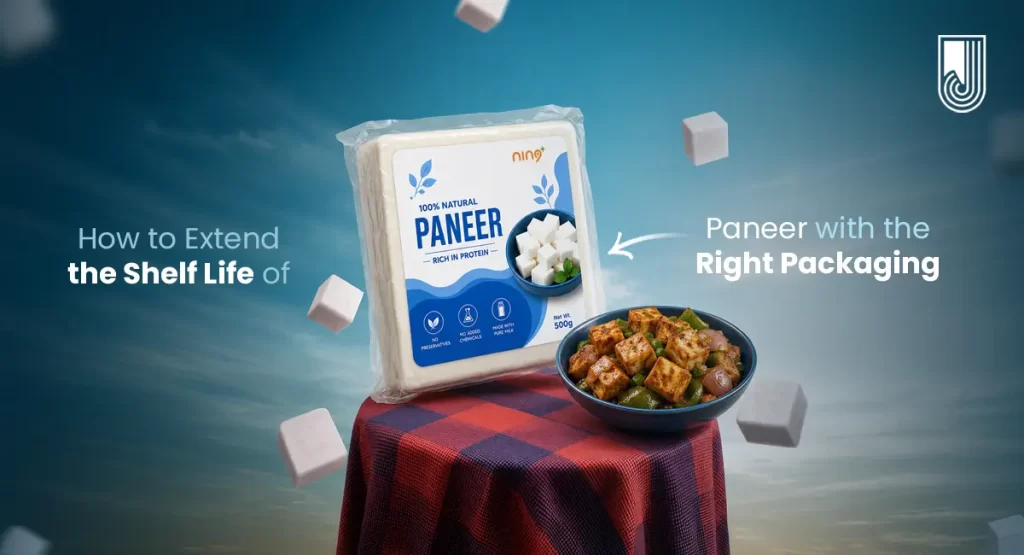
Fresh paneer is one of the hardest dairy products to keep. It is moist, high in protein, low in acid and usually sold without preservatives, which is exactly the kind of food bacteria and mould like. Left open in a fridge it starts to smell sour and turn slimy within a few days. Packed well, the same block can stay sellable for weeks.
For a dairy, that gap decides how far you can ship, how much stock comes back from shops and whether a modern retail chain will list you at all. This guide looks at the main options for paneer packing, what shelf life each one gives in practice, and what to check before you order film.
Why paneer spoils so quickly
Three things work against paneer once it leaves the press.
Bacteria from handling. Paneer is pressed, cut and packed by hand in many plants. Every contact adds microbes, and the moist surface gives them an easy start.
Oxygen. Mould and many spoilage bacteria need oxygen to grow. Air also slowly oxidises the milk fat, which gives old paneer its flat, stale taste.
Moisture loss. Paneer dries out and turns hard and crumbly at the edges if the pack lets water vapour escape, even when it is still safe to eat.
Good packaging cannot fix poor hygiene in the plant. What it can do is stop new contamination, keep oxygen out and hold moisture in, so the paneer you packed on Monday still looks and tastes like Monday’s paneer three weeks later.
Paneer packing options compared
Plain polythene bags or wrap
This is still common with local dairies and sweet shops. A thin PE bag keeps dust off and slows drying, but it lets oxygen through freely and traps air with the product. Published studies on paneer put its refrigerated life at around a week in this kind of pack, sometimes less if the cold chain slips.
Vacuum pouches
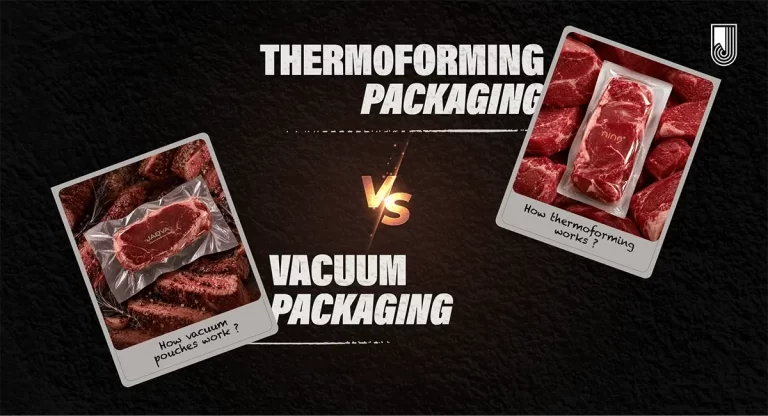
Vacuum packing removes the air from the pouch and seals the paneer in a multilayer film with an oxygen barrier, usually nylon or EVOH between polyethylene layers. With most of the oxygen gone, mould and many spoilage organisms struggle to grow.
Research on paneer vacuum packed in laminated or barrier pouches commonly reports around 30 days at about 6°C, and dairies that add a short heat treatment after sealing report even longer. Your own figure will depend on milk quality, plant hygiene and how cold the product is kept, so treat these as a guide, not a promise.
Vacuum packing also changes how the product looks on the shelf. The film sits tight against the block, so the shape is clean and there is no pool of whey sloshing around the corners.
Modified atmosphere packaging (MAP)
In MAP the air is replaced with a gas mix, usually with a high share of carbon dioxide, which slows bacteria and mould. The paneer sits loosely in a tray or pouch rather than being pressed by vacuum. Studies have reported close to four weeks of acceptable quality for paneer under high-CO2 atmospheres. MAP needs a gas flushing machine and a high barrier film to hold the gas in, so it suits larger dairies more than small units.
Freezing
Frozen paneer keeps for months, but the texture changes after thawing and it tends to crumble when cut. Most buyers expect fresh paneer to be chilled, not frozen, so freezing is mainly used for food service and export stock.
What to look for in paneer pouches
If vacuum pouches look like the right move, these are the points that matter when you speak to a supplier.
- Oxygen barrier. Ask for the oxygen transmission rate (OTR) of the film, not just its thickness. A nylon or EVOH layer is what makes the difference between a 10-day and a 30-day pack.
- Puncture resistance. Paneer blocks have sharp corners, especially after cutting. A tough nylon layer stops pinholes that would let air back in.
- Seal strength through moisture. Paneer releases whey, and the sealing area often gets wet. The inner sealant layer needs to seal reliably even with a little moisture or fat on it.
- Clarity and print. Shoppers want to see the product. Clear vacuum pouches show the paneer itself, while printed vacuum pouches carry your brand, FSSAI details and batch information on the pack.
- Pouch size. Order pouches matched to your block weights (200 g, 500 g, 1 kg) so there is not too much loose film around the product. Excess film wrinkles and can trap air pockets.
Getting the most out of the pack
Packaging and process work together. A few habits make a noticeable difference to how long packed paneer lasts:
- Cool the paneer properly before packing. Warm blocks sweat inside the pouch.
- Keep cutting boards, knives and gloves on a cleaning schedule. Most early spoilage starts with contamination at this stage.
- Check every seal. A single wrinkled or contaminated seal can undo all the benefit of a barrier film.
- Keep the cold chain at 4°C or below from your plant to the shop chiller.
- Run your own shelf life trial. Pack a batch, store it at the temperature your retailers actually manage, and test it every few days for smell, taste and texture.
Frequently asked questions
How long does packed paneer last?
It depends on the pack. Paneer in a plain polythene bag usually keeps for about a week in the fridge. Vacuum packed paneer in a barrier pouch is commonly reported at around 30 days when kept at about 4 to 6°C.
Can I store paneer for 10 days?
Unpacked or loosely wrapped paneer is unlikely to stay fresh for 10 days. In a sealed vacuum pouch kept cold, 10 days is well within its expected life. Once the pouch is opened, use it within two to three days.
Is vacuum packing safe for paneer?
Yes, as long as the paneer is made hygienically and kept chilled. Vacuum packing slows spoilage, but it does not replace refrigeration.
Choosing paneer packing for your dairy
Jayshri Propack makes multilayer barrier films and vacuum pouches for dairies in India and abroad, including pouches sized for paneer blocks. You can see our wider range of dairy packaging or, if you already pack paneer and want longer shelf life, send us your current pack and we will suggest a film structure to trial.